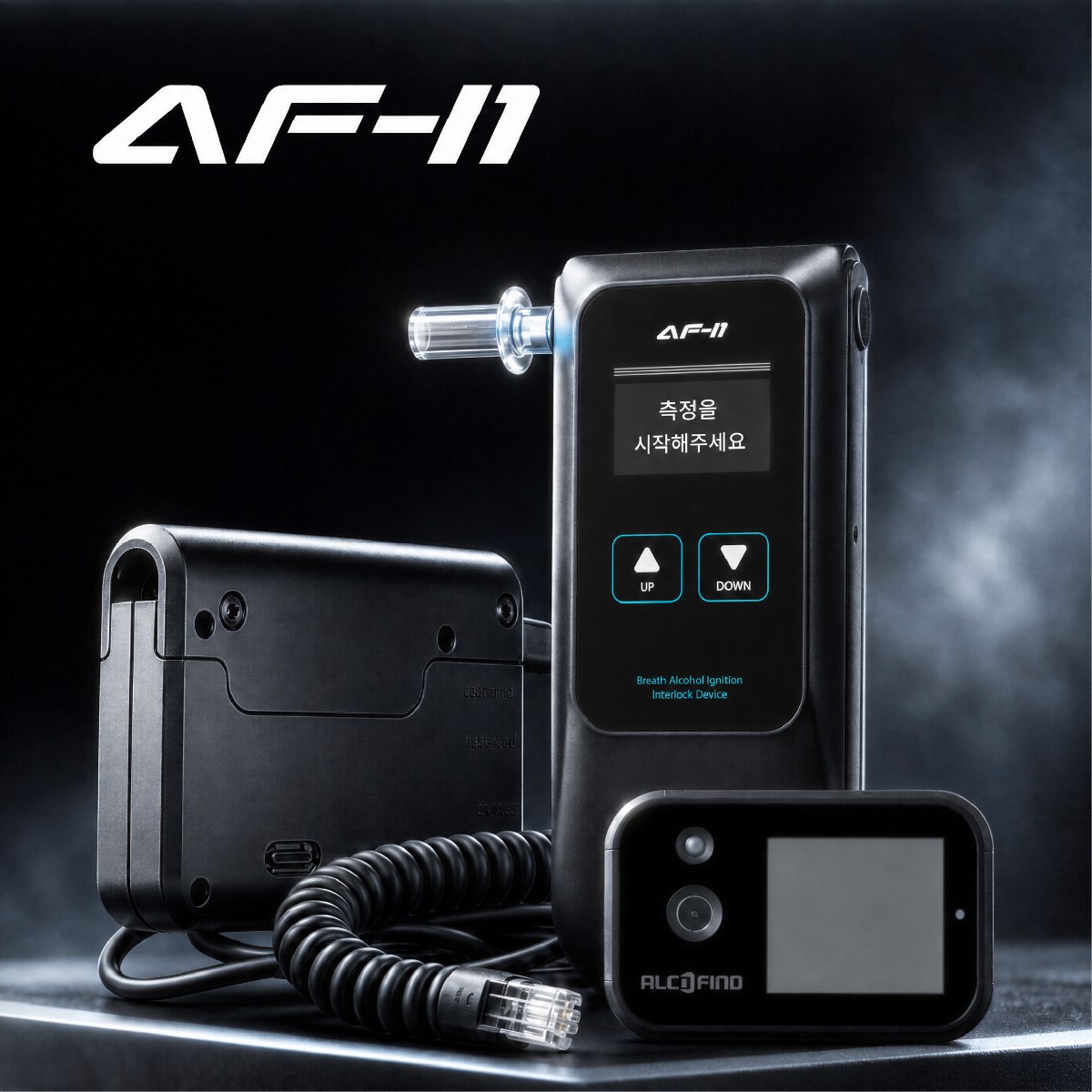
An alcohol interlock is a device designed to control a vehicle's engine start based on the result of the driver's breath test. When public agencies or transport-related organizations consider introducing such equipment, a proposal should show not only what the equipment can do but also the work the agency must carry out after introduction. However, if phrases such as "exempts you from legal liability" or "no liability if an accident occurs" slip in while trying to stress competitiveness, they become promises that go beyond describing the equipment's functions.
Legal immunity is a matter of judging who bears what responsibility in a specific situation in light of laws, contracts, and the actual circumstances and procedures of operation. Product materials, by contrast, describe verifiable functions of a model, such as testing, start control, and data storage. The credibility of a procurement proposal comes not from strong guarantees of outcomes, but from linking the tender requirements, product evidence, and scope of supply without contradictions.
Equipment functions and legal effects answer different questions
The official AF-i1 product information states that it is designed to check the driver's blood alcohol concentration (BAC) and prevent the engine from starting if a set value is exceeded. It also states that the device stores events related to interlock use, such as test results and vehicle starts, and that stored events can be managed and downloaded with dedicated software. Here, an interlock means a device that controls a vehicle's engine start based on results such as a breath test.
What these materials can explain is the scope of the start control and data storage functions the product provides. Conversely, conclusions such as "installing the equipment prevents all drunk driving" or "the agency's and drivers' legal liability disappears" are not supported by the product information alone. This is because the driver's behavior, how the vehicle is operated, the actual condition of the equipment in use, and the applicable rules and contract terms are factors outside the equipment spec sheet.
In particular, do not turn product wording such as "blocks it at the source" into a statement of legal immunity in a proposal. That wording should be read in the context of describing a function designed to control engine starting under set test conditions. It is not a sentence that settles where legal responsibility lies or what the outcome of an accident will be.
A promise of immunity can also conflict with the tender requirements
A procurement proposal is a document that lets the contracting agency compare the specifications, delivery configuration, and scope of installation and usage support it has requested. If a proposal promises legal immunity, evaluators may take it to mean the supplier guarantees outcomes it cannot control. There is also room for it to be interpreted later that the actual scope of delivery differs from the proposal wording.
It is also not appropriate for an equipment supplier to declare whether laws or administrative procedures apply. If the tender notice requires certificates, test reports, specific functions, installation conditions, or submission of operating data, it is clearer to write the proposal around whether those items are met and which documents can be submitted. Claiming superiority by adding legal effects that are not in the notice actually weakens the link between the proposal's evidence and the evaluation criteria.
| What to separate in the proposal | Material to present as evidence | Wording to avoid |
|---|---|---|
| Start control after a breath test | Official function information for that model | Exemption from all legal liability |
| Storage of test- and start-related data | Stored items and management method in the product information | Guaranteed resolution of all disputes |
| Delivery and usage support | Components and guidance actually provided | Taking over all of the agency's operating obligations |
Separating functions, scope of supply, and legal judgments as in the table makes the basis for each sentence clear. For example, when you describe the data storage function, explain the types of events that can be stored and whether they can be managed through dedicated software, within the scope of the product information. Do not go on to guarantee in advance what effect that data will have in a particular dispute.
Revising a hypothetical proposal sentence
For example, suppose an agency issued a tender for in-vehicle alcohol interlocks, and the draft proposal included the sentence "Installing the equipment completely blocks drunk-driving accidents and legal liability." The first thing to observe is that this sentence includes outcomes, namely accidents and legal liability, while the product materials describe start control based on breath test results and event storage.
This gap can be read as meaning that the functional evidence does not reach as far as guaranteeing outcomes. A possible action is to revise the sentence to something like "The device is designed so that the engine will not start if the breath test result exceeds the set threshold, and it can store and manage the test- and start-related events listed in the product information." Then write the delivery configuration, whether usage guidance is provided, and the operating procedures the agency must prepare separately, in line with the actual contract scope.
The standard for considering the revision finished is a state in which, for each sentence, you can confirm which material supports it: the product information, the tender requirements, or the scope of supply. If no accident prevention rates, immunity, or legal application outcomes that are absent from the product materials remain, and no services you do not provide are included, the scope of the proposal becomes much clearer.
Write the support scope as a description of roles, not a transfer of responsibility
Supplying equipment and the user agency's operations are not the same thing. If the supplier provides components, user guidance, or software usage support, you can describe that content and its conditions specifically. On the other hand, who manages the vehicles, who reviews the test data, and who prepares the documents required by the tender may differ depending on the agency's internal work and the contract terms.
So it is better to describe actual support actions than to write "we will handle all management work for you." For example, if you provide a user manual, state that a manual is provided. If dedicated software is included in the product information, state the scope that events can be managed and downloaded with that software. If you propose training, installation, or maintenance support, list who it covers, how often, and the conditions for inclusion only as confirmed in the contract or proposal scope.
This distinction also helps the contracting agency. The agency can see which work it must prepare itself even after introducing the equipment, and the supplier can avoid wording that takes on legal judgments or operating outcomes it does not provide. In the end, an accurate proposal does not diminish the value of the equipment. It describes verifiable functions in a way that fits the purpose of the tender.
Build verifiable links instead of strong promises
When reviewing proposal sentences, you can use "What material can prove this outcome?" as the standard. Write functions supported by official product information together with the model name, and match the documents or conditions required by the tender notice to those requirements. Do not write content that product documents alone cannot answer, such as legal effects or liability issues, as firm promises.
This approach does not make the wording timid. Confirmed functions, such as start control based on test results, tamper detection, inspection and calibration reminders, and storage of test- and start-related events, can be described specifically along with their conditions. However, not leaping from those functions to the conclusion that all of the agency's legal risks disappear is the standard that protects the accuracy and credibility of a procurement proposal.
※ This article provides general information and is not legal advice on any individual case. Consult a lawyer or other professional about specific situations. Laws may be amended, so check the latest text at the Korea Law Information Center.