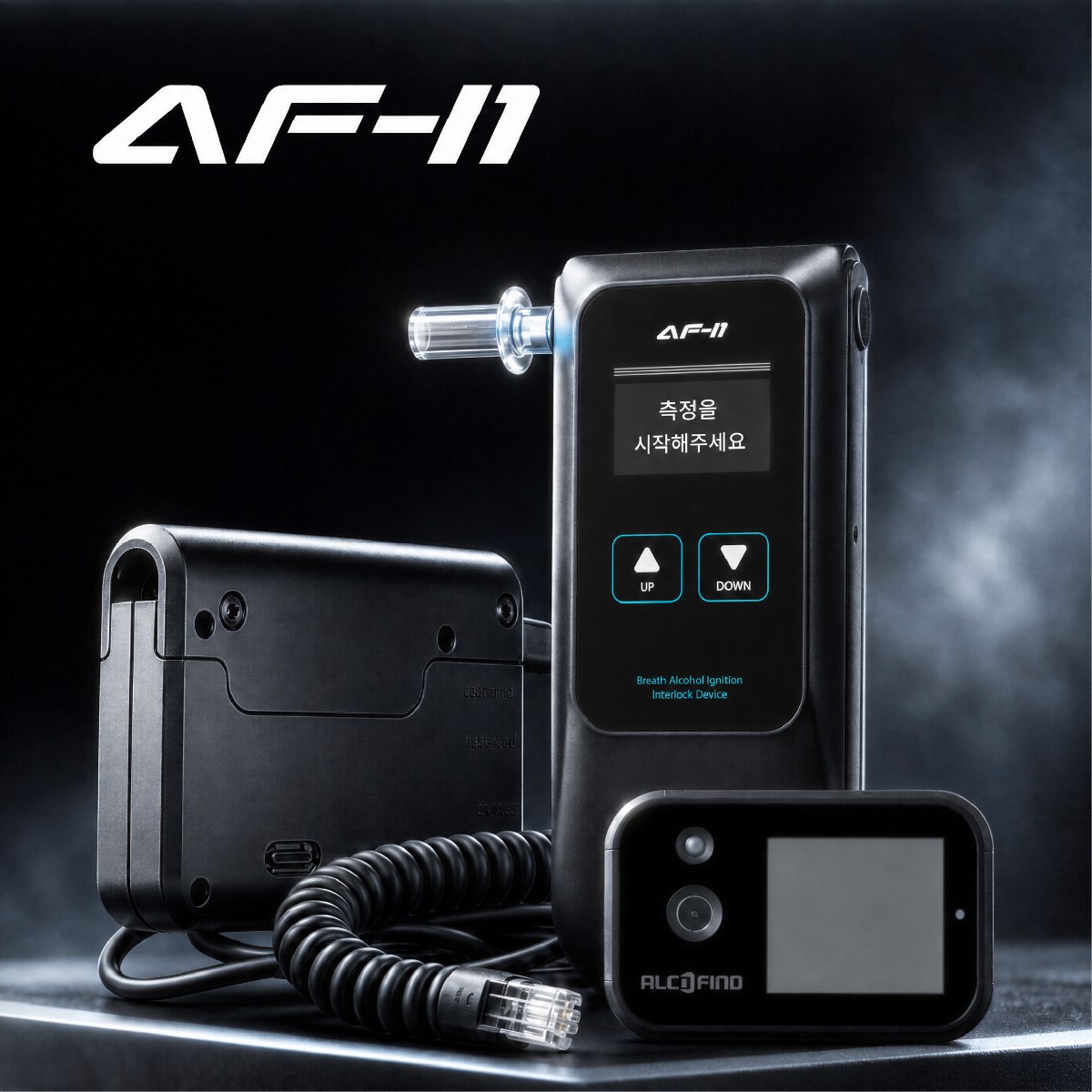
In logistics and transport operations or agency pool vehicles where several drivers take turns using one vehicle, a shift change is not finished just by handing over the keys or the driving assignment. The next driver also needs to know whether the interlock has any messages to check from the previous trip, whether an inspection request is in progress, and when the vehicle was actually handed over. An interlock is an alcohol interlock device that controls a vehicle's engine start based on results such as the driver's breath test. The handset is the device the driver uses for the breath test, and the control box is the unit connected to the vehicle that processes test results and vehicle operation.
Even if usage records are stored on the device, those records alone cannot automatically establish who the driver was at a particular time. When several people use the same vehicle, you need to link the vehicle identification, the actual shift change time, dispatch changes, and items to check on the device screen. The purpose of handover records is not to assign blame quickly. It is to let the next driver start driving knowing the current state of the vehicle and device, and to leave evidence rather than guesswork for when the device records are reviewed later.
Records stored on the device are not the same as driver information
DATECH's official AF-i1 information states that interlock usage data, including vehicle ACC, engine start, test results, and events related to tampering, is stored with date and time information. It also explains that these log events can be managed and downloaded with dedicated software. This is a starting point for checking what happened in the vehicle, but it cannot be seen as a function that by itself proves who was in the driver's seat at that time.
The scheduled shift change time on the dispatch sheet and the actual vehicle handover time can differ. You also need to distinguish the time an event occurred on the device from the time a manager later viewed the log. So rather than arbitrarily attaching the name of the nearest scheduled driver next to an event, it is better to first check the actual shift change time and whether dispatch changed, which avoids distorting the record.
Time periods that cannot be linked should not be forced into place. You can leave them as "driver link needs confirmation." Then narrow the scope of confirmation by looking at dispatch change history, vehicle return times, and maintenance requests together. Clearly marking periods where the record is unclear is itself useful information for the next check.
At handover, record only what the next action needs
A handover record is not a document for passing on how to disable or bypass the device. It is a document that conveys whether the next driver knows the approved usage procedure and whether there are pending items to check on the vehicle and device. Rather than rewriting at length information already in the existing dispatch system, it is better to add only what is needed to link dispatch data and device logs.
| What to look at during handover | Examples of what to record | Why this information is needed |
|---|---|---|
| Vehicle | Plate number or internal management number | Keeps it from getting mixed up with another vehicle's device records |
| Shift change | Actual vehicle handover time and whether dispatch changed | Lets you match which trip segment an event belongs to |
| Interlock | Status shown on the screen and messages that need checking | Keeps the next driver from rediscovering the same issue |
| Support request | Details of the service request and the request number | Lets you keep following the progress of inspection or technical support |
It is best to avoid posting potentially sensitive information, such as driver names or detailed test results, inside the vehicle. Where needed, you can operate so that the person who manages dispatch data and the person authorized to view device logs link the two sets of data through a defined route. If something can already be confirmed from dispatch records alone, there is no need to collect the same information again in a separate handover sheet.
Write what the screen showed and actions in progress instead of "normal"
If you just tell the incoming driver "no problems," it is hard to know later what was checked and what remains. It is better to briefly note what the handset screen showed at handover, whether there was an inspection or calibration reminder, and whether a service request was made. Since official AF-i1 information describes an inspection and calibration reminder function, if a reminder was shown, you can record separately the fact that it appeared and whether follow-up confirmation is needed.
As a hypothetical example, suppose a message related to inspection appeared on the handset when the morning driver returned the vehicle. The first things to observe are whether the message was actually displayed, when the display was seen, and whether a service request has already been made. Do not immediately interpret this as a device failure or a particular driver's problem. In the handover, write something like "inspection message shown, service request number on file, progress needs checking."
A possible action is to keep checking the progress of the service request using the request number, and to get guidance from the installation or service technician if technical interpretation of the device records is needed. The standard for considering the handover complete is a state in which the next driver has received the vehicle number and the pending items, and any matter that needs action is linked to the responsible channel. A signature or check mark alone does not mean the device condition has been resolved.
Do not erase the original record when dispatch changes
In shift driving, a substitute driver may be brought in or a vehicle return may be delayed. If you erase the originally assigned driver's information and leave only the new name, it becomes hard to examine the relationship between device events and actual trips later. Recording the original dispatch, the time of the change, and what changed separately lets you know which time periods to check again.
Even if the interlock records show an unusual event, it is best not to conclude the cause or responsibility from one line in a handover sheet. The AF-i1 is described as detecting, among other things, whether a person is testing directly, whether the vehicle is driven without an approved test, and whether the device is removed from the vehicle. However, the meaning of an individual record can be judged only by looking at the vehicle's condition at the time, the time stored on the device, maintenance history, dispatch data, and the actual handover details together.
Records that need technical interpretation should be left as an area where the installation or service technician examines the device condition and logs. Questions that device functions alone cannot answer, such as trip assignments or HR decisions, also need to be kept separate. With this separation, you can avoid over-interpreting device logs while not missing situations that need checking.
Make it a record that links up before the next trip
At busy shift changes, the more items there are, the easier it is to miss something. That is why the record should center on items that decide the next action, such as vehicle identification, actual shift change time, whether dispatch changed, pending items on the device, and whether a service request was made. Even if you assign a writer and a checker, what matters more is whether both actually confirmed the same content.
When reviewing logs after a vehicle is returned, first distinguish the time an event occurred from the time the log was viewed. Then link the dispatch data and handover records for that time period, and leave segments that cannot be linked as items for further checking instead of filling them with guesses. Handover records for interlock vehicles shared by several drivers create the evidence needed between device data and actual trip records, and with that evidence, the next trip can also start from a clearer state.