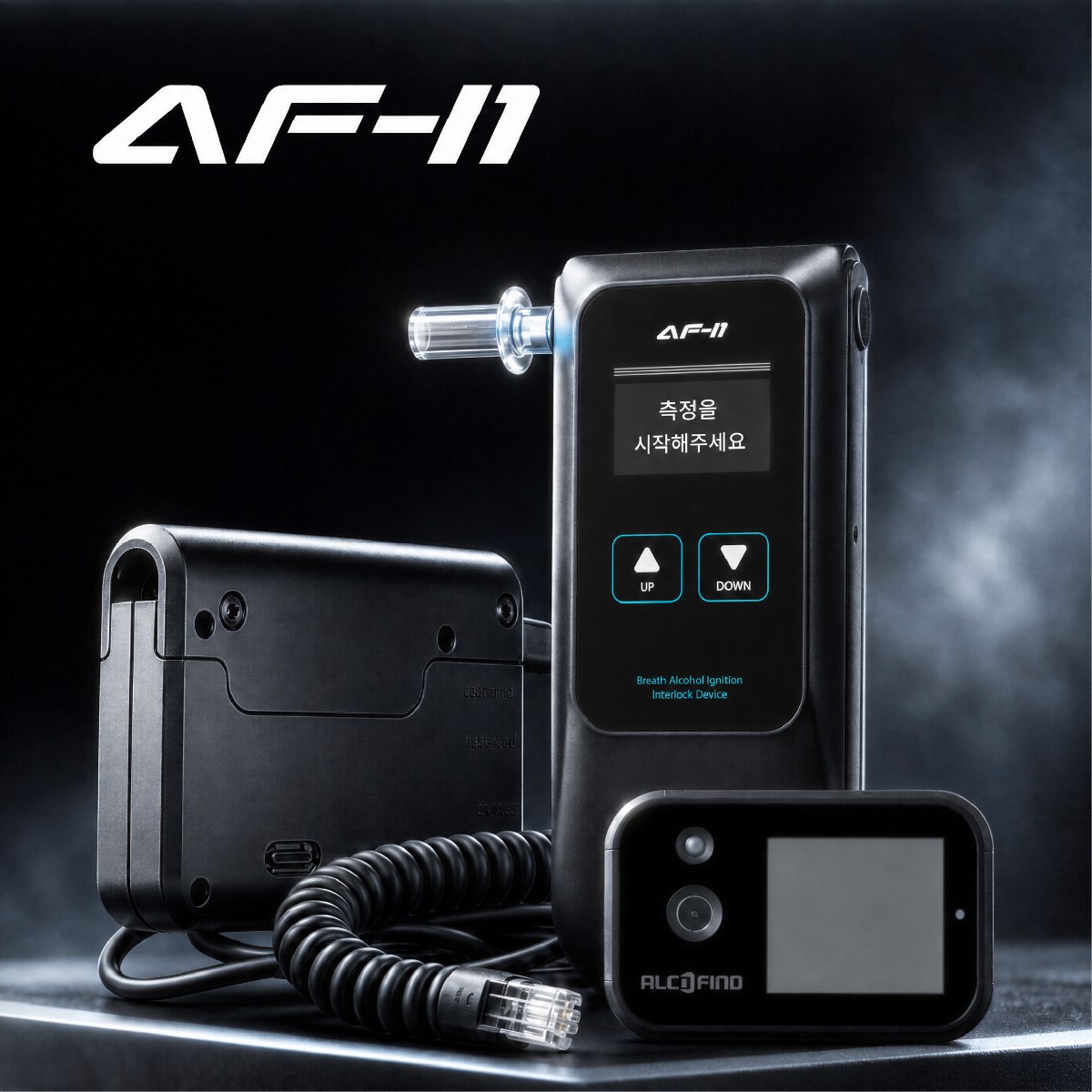
A voluntary interlock pilot is a process of first installing alcohol interlocks in actual work vehicles to confirm, before expanding, that the usage procedures and management tasks are workable. An interlock is a device designed to control whether a vehicle can start based on the driver's breath test result and other inputs. For a fleet manager, the core of a pilot is not simply finding a vehicle where the device works, but choosing vehicles in which installation, use, and record management can be carried through in real operating conditions.
If you choose only the vehicle with the most mileage or the one that is easiest to manage, it is hard to know what will change when you later extend to other vehicles. Conversely, if you put every complex condition, such as driver rotation, a distant maintenance base, and an unfamiliar vehicle model, into one vehicle from the start, it is hard to pinpoint the cause when problems occur. You need to first decide what questions the pilot should answer and then select vehicles that have the conditions those questions require.
First decide the questions the pilot will answer
Selection criteria depend on the purpose of the introduction. If you want to know whether drivers can carry out the pre-start test procedure without difficulty, a vehicle used by a single assigned driver can be a starting point. On the other hand, to confirm whether guidance and division of responsibility work at driver changeovers in shared vehicles, a vehicle actually used by several people is more suitable.
Management tasks should also be split into separate questions. For example, list as separate items to confirm whether inspection schedules can be set after installation, who will download and review interlock usage records, and how dispatch and support requests follow when a test failure or device alert occurs. Rather than the broad statement "the pilot went well," writing down in sentences which procedures you will confirm gives you criteria for comparing vehicles.
Check whether the vehicle can be reviewed for installation
For each candidate vehicle, compile the model, model year, vehicle identification, power-related information, and recent maintenance history for use in the installation review. The official AF-i1 guidance gives the control box input voltage range as 8.5V minimum to 48V maximum. However, this figure alone cannot determine whether a particular vehicle can have the device installed, so the actual connection feasibility and installation scope should be reviewed vehicle by vehicle with the installer.
A vehicle in unstable condition, or one scheduled for replacement or major repair soon, can make the pilot results hard to interpret, because it becomes hard to separate a device problem from an existing power or maintenance problem in the vehicle. Having site staff test the wiring or start-control parts for installation can become a hazard rather than a pilot procedure, so it is better to coordinate the installation schedule and vehicle handover time in advance.
Capture differences in drivers and schedules in the sample
A vehicle with a single assigned driver is good for seeing how people learn the test procedure and each individual's usage flow. A shared vehicle is meaningful for confirming mouthpiece management at driver changeovers, how usage guidance is passed on, and who adjusts the next trip when a test result occurs. If you chose only one type, you should also record that the results cannot yet be applied to the other mode of operation.
For the operating schedule, too, what matters is not whether a vehicle is "busy" but whether there is room to get support. If the vehicle cannot be taken out of service when device inspection or record checks are needed, it is hard to check problems that occur during the pilot in time. Compiling the installation date, operating hours, the time the vehicle stays at the depot, and the person who can change dispatch lets you judge realistically whether support is possible.
| Condition to compare | Question to settle before selection | What to record in the pilot |
|---|---|---|
| Vehicle and installation conditions | Can the installation be reviewed using vehicle information and maintenance history? | Vehicle information reviewed and whether installation is possible |
| Driver operating mode | Is it for a single assigned driver, or do several drivers rotate? | Actual number of users and changeover situations |
| Operating and inspection time | Can time be secured for installation, inspection, and record checks? | Time spent at the depot and how to contact support |
| Responsibility for record review | Who checks the stored usage records, and when? | The reviewer and the timing of checks |
Look at record management, not just device use
According to the official AF-i1 guidance, the components include the handset the driver uses, the control box that serves as the central processing unit, and dedicated PC software. It also states that the device stores interlock usage data such as vehicle ACC, engine start, test results, and tamper-related events, and that log events can be managed and downloaded with the dedicated software. So a pilot vehicle should let you test not only the scene of the driver taking a test but also the process of staff checking the stored information.
The purpose of record review is not only to monitor particular drivers. It can be material for distinguishing, when test failures repeat, whether usage guidance was insufficient, whether the operating plan and inspection times did not fit, or whether there was no one assigned to respond to device alerts. If you decide before the pilot starts who receives the records, when they are reviewed, and the route for passing unusual situations to the dispatcher and the installation and support contact, results will not be missed.
As a hypothetical example, suppose that in a vehicle used by one assigned driver, testing itself took place every day, but no schedule was set for downloading records, so the usage history went unreviewed for a month. The facts to observe are two: "the device was used" and "the manager did not check the records." This can lead to the interpretation that the record management procedure was not tied to the operating schedule, rather than that device use failed. A possible action is to assign a time for checking records on days when the vehicle stays at the depot and designate a person in charge. This item can be considered complete when the records are checked at the set time and you can record either a support request or normal handling based on the results.
Clearly record the scope to which pilot results apply
The fact that there were no problems with one vehicle at one site does not let you conclude that the same approach will work for every vehicle model, every driver, and every work shift. For example, if you ran only vehicles with a single assigned driver, changeover situations in shared vehicles should be left as unverified conditions. Conversely, if you tested several conditions at once, recording separately for each vehicle which problems appeared under which conditions helps with the next decision.
At the end of the pilot, organize separately the vehicles that will continue using the device, the vehicle groups that need further checking, and the items for which installation or support procedures must change. You should also set the schedule for responding to inspection and calibration reminders and the person who will manage records, to reduce the risk that only the vehicles remain on site while the management procedure is left empty. Whether voluntary introduction automatically meets installation obligations or legal requirements is a separate legal review matter and cannot be judged from these pilot results alone.
A good pilot vehicle is not the most convenient vehicle but one that shows the conditions needed for the questions you set at the start. By comparing installation suitability, driver operating mode, access for inspection, and responsibility for record review together, you can find concrete issues to resolve before expanding, even in a small pilot.