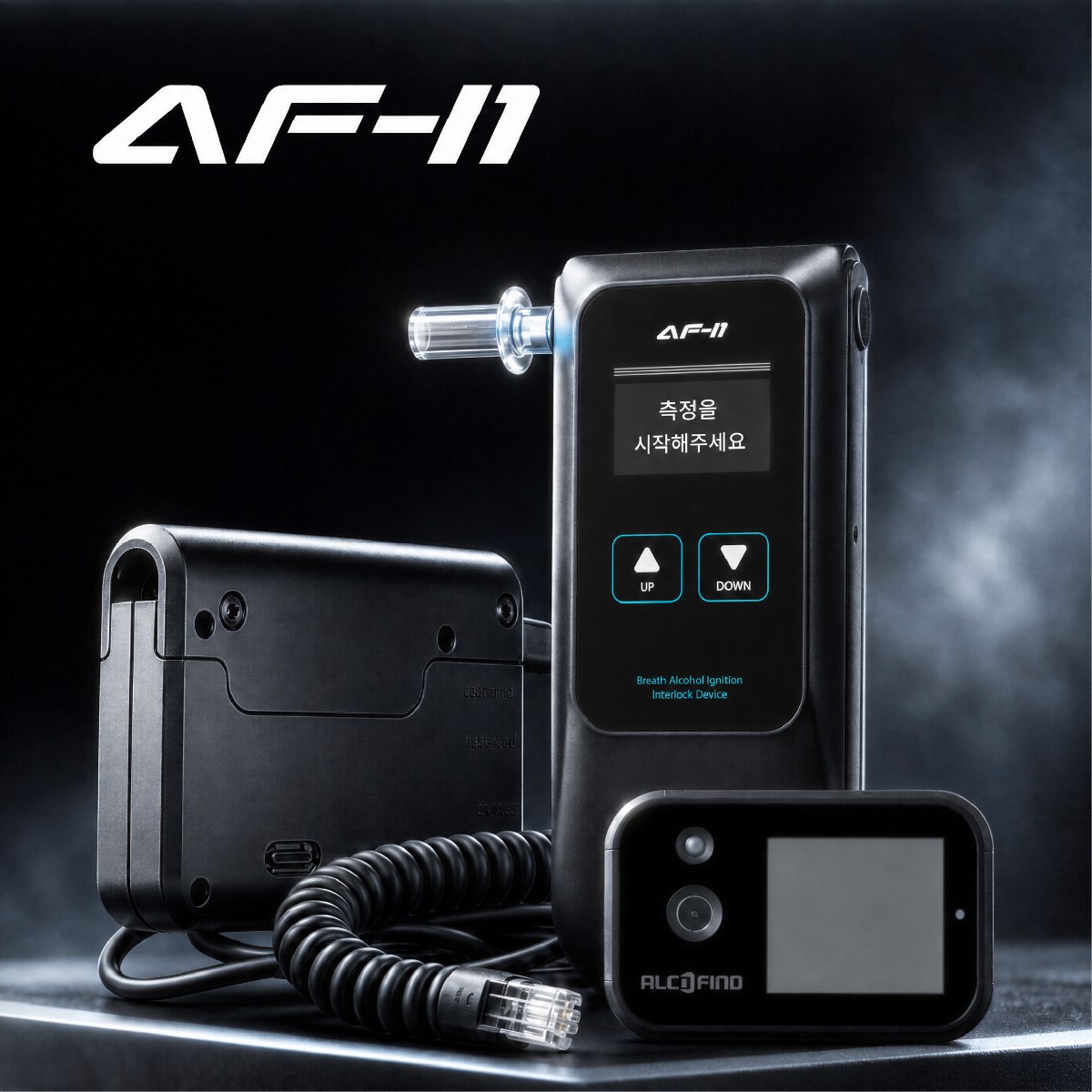
When breath alcohol test results are kept on a computer screen or in management records, the reading from the analyzed breath sample may be shown together with a driver ID. A driver ID here is identifying information that distinguishes who took the test, such as a name, employee number, or card authentication value. Safety managers and quality or technical staff cannot conclude that a result was linked to the right person just because it was saved.
Linking in this article means the processing that joins a test result and a driver ID into a single record. Even if the reading is accurate, if another person's ID is attached, the record cannot explain who took the test. So linking errors can be found only by tracing, separately from how the sensor analyzed the concentration, the process from when the ID was confirmed to when it was attached to the result and changed.
Separate where the reading and the ID are produced
First, distinguish which device or program produces each piece of information at the site. The breathalyzer produces and can store the breath test result, and a smartphone app or management program can receive and display that result. The driver ID may be read from a separate authentication method, or a person may select it directly on screen after the test.
DATECH's official product information for the AF-40BT lists storage of up to 10,000 test results, Bluetooth 5.0 LE smartphone connectivity, and a dual mode for standalone use and app use. However, this information alone does not tell you whether the driver ID is read automatically or on what basis the app links the ID and the result. The starting point for error analysis is not to treat the breathalyzer's storage function and the site system's ID linking function as the same feature.
Reconstruct the linking order from three timestamps
When reviewing linking errors, look side by side at the time the ID was confirmed, the time the test result was generated, and the time the result and ID were linked or changed. A flow in which the ID is authenticated first and then the test is taken has a different time order from a flow in which the person is selected on screen after the test. This is why you cannot conclude it is an error just because the linking time is later than the test time.
| Record to separate | What to look at in the record | Clues that suggest an error |
|---|---|---|
| Driver ID confirmation | Confirmation method, confirmed ID, confirmation time | Another ID confirmation follows before the next test |
| Test result generation | Breathalyzer information, stored result, generation time | Only a result is generated, with no ID confirmation record |
| Linking result and ID | Whether linked automatically or selected manually, linking time | A different ID is attached after the test, or there is no basis for the link |
| Link change | Original ID, changed ID, time and reason for the change | The original link information has disappeared and only the final ID remains |
The table does not require a particular storage format. It is a standard for checking how much of this information you can confirm in the breathalyzer, app, and management screen you currently use. For example, if a manager selects the driver after the test, the person who made the selection and the selection time must be kept so you can distinguish a normal manual link from a wrong selection.
In back-to-back tests, test whether the previous ID lingers
Where several people test one after another, you need to check whether the previous person's ID remains on the next result. Typical scenarios to check are when an ID was confirmed but no test was taken, when a test ended partway through, and when the connection between the app and the breathalyzer dropped and then reconnected. This is a matter of when the connected system treats one person's test process as finished, separate from whether the sensor read the concentration accurately.
As a hypothetical example, suppose Driver A confirmed their ID and left without testing, and then Driver B took a test. First observe whether a cancellation or end of session was recorded after A's ID confirmation, and which ID B's test result was linked to. If B's result has A's ID attached without any end-of-session record, you can first consider the possibility that the existing selection was not cleared, rather than an abnormal reading.
One possible action is to check whether the flow that clears the existing ID selection after cancellation, a timeout, or a communication reconnect actually works. Using test identifiers instead of real personal information and comparing the results stored on the breathalyzer with the records on the connected screen keeps the scope of the review clear. The completion standard is not just that the name on the screen changes. It is a state in which the previous test ID does not remain on the next test and each result is shown separately with its own test ID.
Distinguish automatic links from links chosen by a person
When authentication information arrives late or automatic linking fails, a manager may attach an ID to the result manually. Manual selection is not an error in itself, but if it is kept in the same way as an automatic link, it becomes hard later to judge why a particular ID was attached. For manually linked results, you can consider keeping the selection time, the person who made the selection, and the information used for the selection as part of the result's change history.
When correcting a result that already has a different ID attached, it is also better for analysis not to overwrite the original link. Only when the original ID, the changed ID, and the time and reason for the change are kept together can you tell whether the problem was at the authentication stage or a wrong selection on screen. If only the final ID remains, the reading is preserved, but it becomes hard to find where the error started.
Compare the breathalyzer records and the connected screen separately
The AF-40BT uses an electrochemical sensor, and its official specifications give an accuracy of ±0.005 %BAC at 25 ℃ and 0.100 %BAC. This is a specification about readings under set conditions. It does not mean the driver ID was linked correctly. The storage function for up to 10,000 results also does not explain the rules for linking with an external ID system.
If a result stored on the breathalyzer and a result on the connected screen have the same time and reading but appear under a different person's name, it makes sense to look first at the ID linking rules and the sync process rather than the sensor or concentration units. Conversely, if the two records point to different test results, you can compare transfer timing, duplicate receipt of the same result, and missing results separately. Only by keeping the test event and the ID linking event separately can you review the reliability of the readings and the reliability of driver identification each on its own.